
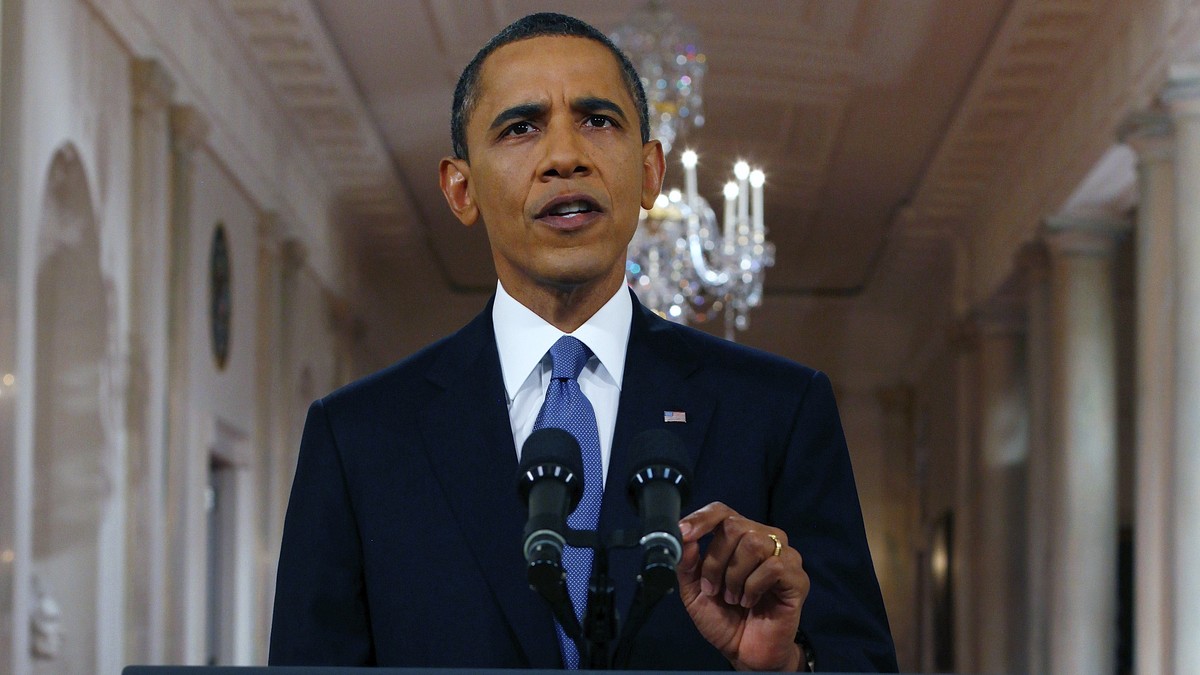
President Obama’s accelerated “drawdown” of US troops in Afghanistan
will, at the very least, create a power vacuum; and the list of
candidates to fill it is not encouraging. No serious analyst believes
the government of Hamid Karzai will get the job done, as it lacks both
popular support and the necessary resources. Moreover, despite all our
efforts at nation building, there is no “Afghan people” but rather a
collection of Pashtuns, Tajiks, and others living in territories
controlled by hetmen and drug lords.
The Taliban continue operating in force as evidenced by ongoing attacks and a recent jailbreak that freed almost 500 terrorists. Obama’s call to negotiate with its “moderates”
whatever that means, has enhanced its chances of returning to power.
Iran shares an 800 mile border with Afghanistan and is making noise
about protecting the Shiite Hazara in this Sunni Muslim country. (Can
anyone say Sudeten Germans?) It could take over Afghanistan’s
heartland, while a fawning international community hails it as a human
rights defender. China also borders Afghanistan, and its
meddling in the region is growing. It effectively annexed Kashmir’s
northeast using the same rationale as it did to grab Tibet and took a
“great leap forward” in regional ties with last year’s Sino-Pakistan
nuclear pact. It has been wooing Karzai, recently feting him like a
king in Beijing, and has expanded its economic base by, as one example,
developing a major copper field in Afghanistan’s Logar province.
Pakistan remains a major candidate to take power, especially with the
American government’s penchant to tolerate Pakistani duplicity.
Former Secretary of State Henry Kissinger called the Pak-Afghan
connection “organic,” and the US withdrawal could render their mutual
nothing more than a formality like the one separating Syria and Lebanon.
Given those multiple nightmare scenarios, it is perplexing that the
Obama administration continues to ignore the one regional power whose
interests are not inimical to ours: India. Our foreign policy interests coincide;
it is the only effective counterweight against otherwise unchecked
Chinese expansionism; it has the requisite economic, military, and
intelligence capability; and the specter of increased Indian influence
in the region scares the pants off the Pakistanis and might get them to
behave. China’s Afghanistan venture is also part of its strategy to encircle India.
Incredibly, rather than recognizing the threat to our common
interests and partnering with India to stop it, “the Obama
administration is practically rolling out an Afghan red carpet for
China,” according to a respected Asian affairs analyst out of Singapore.
Obama also looked the other way when, according to Matthew Rosenberg of the Wall Street Journal,
Pakistani Prime Minister Yousuf Raza Gilani lobbied Karzai “against
building a long-term strategic partnership with the U.S., urging him
instead to look to Pakistan—and its Chinese ally—for help in striking a
peace deal with the Taliban.”
There are several things the United States can and should do,
starting with an intensive diplomatic effort to engage India instead of
China to further American interests, not Chinese. With over 100,000
troops in Afghanistan, the US still has enough gravitas to influence
events in the country. The best place to change direction and use that
weight is Bamiyam, Wardak, and Parwan provinces, where Indians are
bidding for the right to extract iron ore from the enormous Hagijak
mine; but the 15 Indian companies have a problem their competitors do
not: how to transport the extracted minerals through 400 miles of
Pakistani territory. The US can help. While we can expect Pakistan to
balk at letting Indian goods (and security forces) cross its territory,
we should not expect it to stop its ally—and financial benefactor—the
United States. Private US firms could contract to provide the services
that will enable Indian companies to prevail and keep that mineral
wealth from falling into Chinese hands.
The Hajigak mine project is only the most obvious point where the
India-US relationship can provide a strong presence in Afghanistan to
stave off an impending foreign policy disaster. While the details will
vary, this is the sort of initiative the Obama administration should be
making now to protect our interests, strengthen a strategic relationship
with the one free nation in the region, and counter China’s economic
imperialism and its growing strategic alliance in the Muslim world. The
clock is ticking, and America’s ability to influence events will last
only so long as we do. Once out of the region, the US will be powerless
to stop Islamist or Chinese expansion to the detriment of our
interests—unless we have an ally in place that shares them.